
Can you actually get decent noise cancelling headphones for under $200? Yes — and you don’t have to settle for mediocre. The gap between budget and premium ANC (active noise cancellation) has narrowed dramatically over the last three years. For under $200, you can find headphones that block out barking dogs, construction noise, and chatty roommates well enough to stay in flow for hours.
Shopping for affordable noise canceling headphones home office use is actually easier now than it was two years ago — the technology has commoditized fast, and the brands have caught up.
Here’s everything you need to know before spending a cent.
What’s the Difference Between Active and Passive Noise Cancellation?
This question trips up a lot of buyers, and it matters more than you’d think.
Passive noise cancellation is physical isolation — the ear cups create a seal around your ears and block sound the same way earplugs do. Quality over-ear padding can reduce ambient noise by 15–25 dB on its own. No electronics involved.
Active noise cancellation (ANC) uses tiny microphones to detect ambient sound, then generates an opposing sound wave to cancel it out. It works best on constant low-frequency noise: HVAC systems, traffic rumble, airplane hum, fans. ANC adds another 15–30 dB of reduction on top of passive isolation, depending on the headphone.
For a home office, you’ll want both. Good passive isolation handles sudden sounds like a door slam or a dog bark, while ANC takes care of the steady background drone — the kind you stop noticing until it’s gone.
Headphones under $200 now offer hybrid ANC that combines both approaches. You don’t need to spend $350 on Sony XM5s to get genuinely useful noise cancellation for remote work.
Which Headphones Under $200 Are Actually Worth Buying?
 Foto: stokpic
Let’s cut through the marketing and look at what consistently performs well in this price range.
The Top Picks at a Glance
| Model | Price | ANC Quality | Battery Life | Best For |
|---|---|---|---|---|
| Sony WH-1000XM4 | ~$198 (sale) | Excellent | 30 hrs | All-day focus sessions |
| Anker Soundcore Q45 | ~$80 | Good | 50 hrs | Budget-first buyers |
| Jabra Evolve2 55 | ~$199 | Excellent | 36 hrs | Video calls + focus |
| Bose QC45 | ~$199 (sale) | Excellent | 24 hrs | Comfort over long days |
| Edifier WH950NB | ~$80 | Very Good | 55 hrs | Best value ANC |
| JBL Live 660NC | ~$130 | Good | 50 hrs | Casual home workers |
Breaking down what makes each one stand out:
- The Sony WH-1000XM4 frequently drops to $198 or below and genuinely performs at the level of headphones costing $100 more. Its “Speak-to-Chat” feature automatically pauses audio when you start talking — a small detail that becomes useful dozens of times a day.
- The Jabra Evolve2 55 is the strongest call-quality pick at this price. Built specifically for professional communication, the mic performance measurably outperforms consumer-grade headphones in the same bracket.
- The Edifier WH950NB is the sleeper hit — outstanding ANC for $80, with 55-hour battery that most $350 headphones can’t match.
- The Bose QC45 earns its spot on comfort alone. The ear cups don’t fatigue your head even after 8+ hours, which matters more than any spec when you’re wearing them all day.
What Should You Actually Prioritize?
Your priorities depend heavily on what your workday looks like:
- Mostly on calls? Prioritize microphone quality and call clarity (Jabra Evolve2 55, Poly Voyager Focus 2). A poor mic makes you sound like you’re calling from a tunnel — ANC won’t fix that.
- Mostly focused, solo work? ANC strength and comfort matter more (Sony XM4, Bose QC45). You want to disappear into the task, not adjust your headphones every hour.
- Both? Look for multipoint Bluetooth — you can connect to your laptop and phone simultaneously and switch between them without re-pairing.
Do Cheap Noise Cancelling Headphones Actually Work?
Honest answer: it depends on what “cheap” means to you and what you’re cancelling.
Headphones under $50 generally have weak ANC. You’ll notice a mild reduction in ambient noise, but it won’t be enough to block a loud household or street noise during a call. The microphones that drive ANC at this price point are low-quality, which means the cancellation is inconsistent and sometimes introduces a faint hiss.
In the $80–$130 range, ANC becomes genuinely useful. The Anker Q45 and Edifier WH950NB both provide meaningful noise reduction that real remote workers rely on daily. Verified user reviews consistently report that HVAC noise, neighborhood traffic, and household appliances become inaudible or nearly so with ANC active.
Above $150, you’re hitting diminishing returns on ANC strength alone, but you often gain better microphone quality, more reliable Bluetooth, and superior comfort for extended wear — differences that compound across an 8-hour workday.
The biggest mistake buyers make is defaulting to the cheapest option and feeling let down when it underperforms. Spending $80–$100 on a proven model like the Anker Soundcore Q45 will give you far more satisfaction — and fewer distracted work sessions — than a $30 no-name set.
Does Noise Cancellation Help with Voice Calls and Video Meetings?
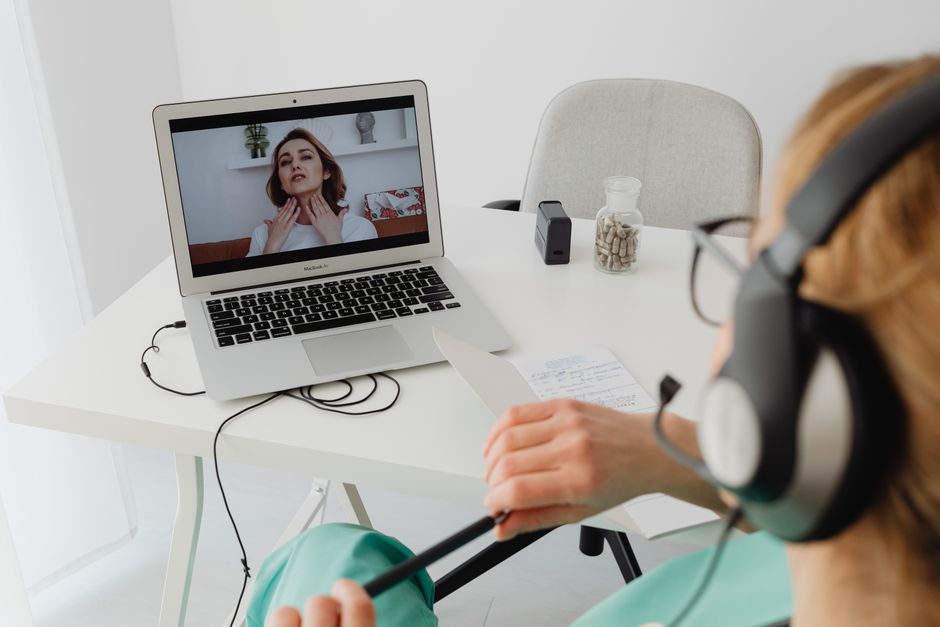 Foto: geralt
This is where buyers often get confused: ANC and microphone quality are two completely separate things.
ANC blocks what you hear. Your microphone quality controls what others hear from you. A headphone can have class-leading ANC but a mediocre mic — and that’s a dealbreaker for Zoom, Teams, and Google Meet calls.
What Makes a Mic Good for Home Office Calls?
Look for these features in product specs:
- Boom microphone — a physical arm that swings near your mouth is nearly always clearer than an embedded mic built into the ear cup. Proximity to your mouth matters more than the mic’s technical spec sheet.
- Microphone noise cancellation — separate from ANC, this filters your background noise before it reaches the call. Some headphones handle this in hardware; others rely on software like Krisp or NVIDIA RTX Voice.
- Uni-directional or cardioid pickup pattern — captures your voice from one direction, rejects room noise coming from other angles.
Best Options for Call Quality Under $200
The Jabra Evolve2 55 is the standout. It was engineered for professional communication — eight built-in microphones create a focused pickup zone, and the ear cushions have passive isolation strong enough to significantly reduce what your mic picks up from the room.
For a step down in price but still solid call quality:
- Poly Voyager Focus 2 (~$150) — great boom mic, UC-optimized, reliable for all-day calls
- MPOW HC5 (~$50) — no ANC, but the boom mic is exceptional for the price if call clarity is your only requirement
If you’re using headphones primarily for meetings, don’t let ANC be your only deciding factor.
How Long Should Noise Cancelling Headphones Last for Home Office Use?
Battery life matters far more when you’re working from home than when you’re commuting.
A commuter might use headphones 90 minutes a day. A remote worker typically wears them 5–8 hours. That gap changes the calculus entirely — a 20-hour battery that recharges overnight is fine for commuters but leaves a remote worker scrambling by Thursday afternoon.
Battery Life Benchmarks
Here’s what to realistically expect:
- Under 20 hours: Risky for all-day use — you’ll likely need to charge mid-session at least once during the week
- 20–30 hours: Solid for most work-from-home setups. Sony XM4 (30 hrs) and Bose QC45 (24 hrs) fall here.
- 40+ hours: You’ll rarely think about charging. Anker Q45 (50 hrs) and Edifier WH950NB (55 hrs) sit in this category despite costing under $100.
Does ANC Drain Battery Faster?
Yes, meaningfully so. Most headphones lose 30–40% of their stated battery life when ANC is active. A headphone rated at 50 hours might realistically deliver 30–35 hours with ANC running continuously.
Some headphones let you toggle ANC off when you’re in a quiet room — a useful way to stretch battery when you don’t need the noise blocking.
Fast charging is an underrated feature. The Sony XM4 gives you 1.5 hours of playback from a 10-minute charge — a practical lifesaver when you’ve forgotten to plug in overnight and have a 9am call in 20 minutes.
Are Wireless or Wired Headphones Better for Home Office Use?
 Foto: Tima Miroshnichenko
Wireless wins for most home office setups — you can walk to the kitchen, pace during a call, or move between rooms without pulling your laptop off the desk.
Wired has legitimate advantages that wireless can’t fully replicate:
- Zero latency — critical for audio or video editing. Wireless Bluetooth typically introduces 100–300ms of delay: inaudible in conversation, but noticeable when syncing audio to video.
- No charging — never dead at the wrong moment
- Often better sound quality at equivalent price points, since no compression is applied to the signal
For standard remote work — meetings, focused sessions, communication — wireless Bluetooth is the right call for most people. The freedom of movement is worth the battery management overhead.
A practical middle ground: pick wireless headphones that also support a 3.5mm wired connection. That way you can use them wired when battery is low or you need zero-latency audio. The Sony WH-1000XM4 and Bose QC45 both support wired use — a small but useful backup when it counts.
What Should I Know Before Buying?
A few things that never appear in spec sheets:
Clamping force — Some headphones press firmly against your head, which causes real discomfort after 2–3 hours. If you wear glasses, this is critical: the arms of your frames interrupt the ear seal, reducing passive isolation and increasing pressure on the sides of your head. Read reviews that specifically mention glasses comfort before committing. The Bose QC45 consistently comes up as glasses-friendly; the JBL Live 660NC less so.
Heat and sweat — Over-ear headphones with pleather or synthetic ear pads trap heat. After 3–4 hours, your ears will feel it. If you run warm or live somewhere hot, look for velour or fabric ear cushions, or budget $15–$25 to swap out the pads post-purchase. Replacement pads for most Sony and Bose models are widely available and take five minutes to install.
Multipoint Bluetooth — Connects to two devices simultaneously so calls route automatically from your laptop to your phone without manual switching. Not universal under $200, but the Sony XM4 and Jabra Evolve2 55 both have it. Worth seeking out if you switch devices regularly throughout the day.
Firmware updates — Sony and Jabra push updates that genuinely improve ANC strength and call quality over time. Users who bought the XM4 at launch have measurably better noise cancellation today than on day one. Budget brands often ship a product and never touch it again — that gap affects how your headphones perform 18 months from now.
Return policy — Fit and comfort are personal. A headphone that works perfectly for one person can become unbearable for another after two hours. A 30-day return window matters. Amazon’s return policy is more forgiving than most specialty retailers — worth factoring in if you’re deciding between two models.
The Bottom Line: Which One Should You Get?
 Foto: Rodolfo Quirós
Best overall under $200: Wait for the Sony WH-1000XM4 to drop to $198 or below — it does regularly, especially around major sale events. The ANC is class-leading at this price, battery holds up across a full work week, and multipoint Bluetooth handles device switching without friction.
Best under $100: The Edifier WH950NB. ANC performance that rivals headphones twice the price, 55-hour battery, and a price that leaves room for a decent desk lamp. Most buyers walk past it because they’ve never heard of the brand. That’s their loss.
Best for calls: The Jabra Evolve2 55. If you’re on video calls for 3+ hours a day, the mic quality gap between this and consumer options is real — and audible to everyone you speak with.
Ready to upgrade your home office audio? Start with your most pressing problem — background noise during calls, focus during deep work, or all-day comfort — and match the headphone to that need. Any of the models above will be a genuine upgrade over laptop speakers and the meeting interruptions that come with them. Pick one, commit, and get back to your best work.
Frequently Asked Questions
What’s the difference between active and passive noise cancellation?
Passive noise cancellation uses physical ear cup seals to block sound (15-25 dB reduction). Active noise cancellation uses microphones to detect ambient sound and generate opposing waves (15-30 dB additional reduction). For home office, you need both: passive handles sudden sounds like door slams, while ANC manages steady background noise.
Can you get good noise cancellation under $200?
Yes. Noise cancellation technology has commoditized dramatically over the last three years. Headphones under $200 now offer hybrid ANC combining both passive and active approaches, eliminating the need to spend $350+ on premium models for genuinely useful noise cancellation.
What types of noise does ANC work best on?
ANC works best on constant low-frequency noise like HVAC systems, traffic rumble, airplane hum, and fans. For sudden sounds like barking dogs or door slams, the passive noise cancellation from quality ear cup padding is most effective.


