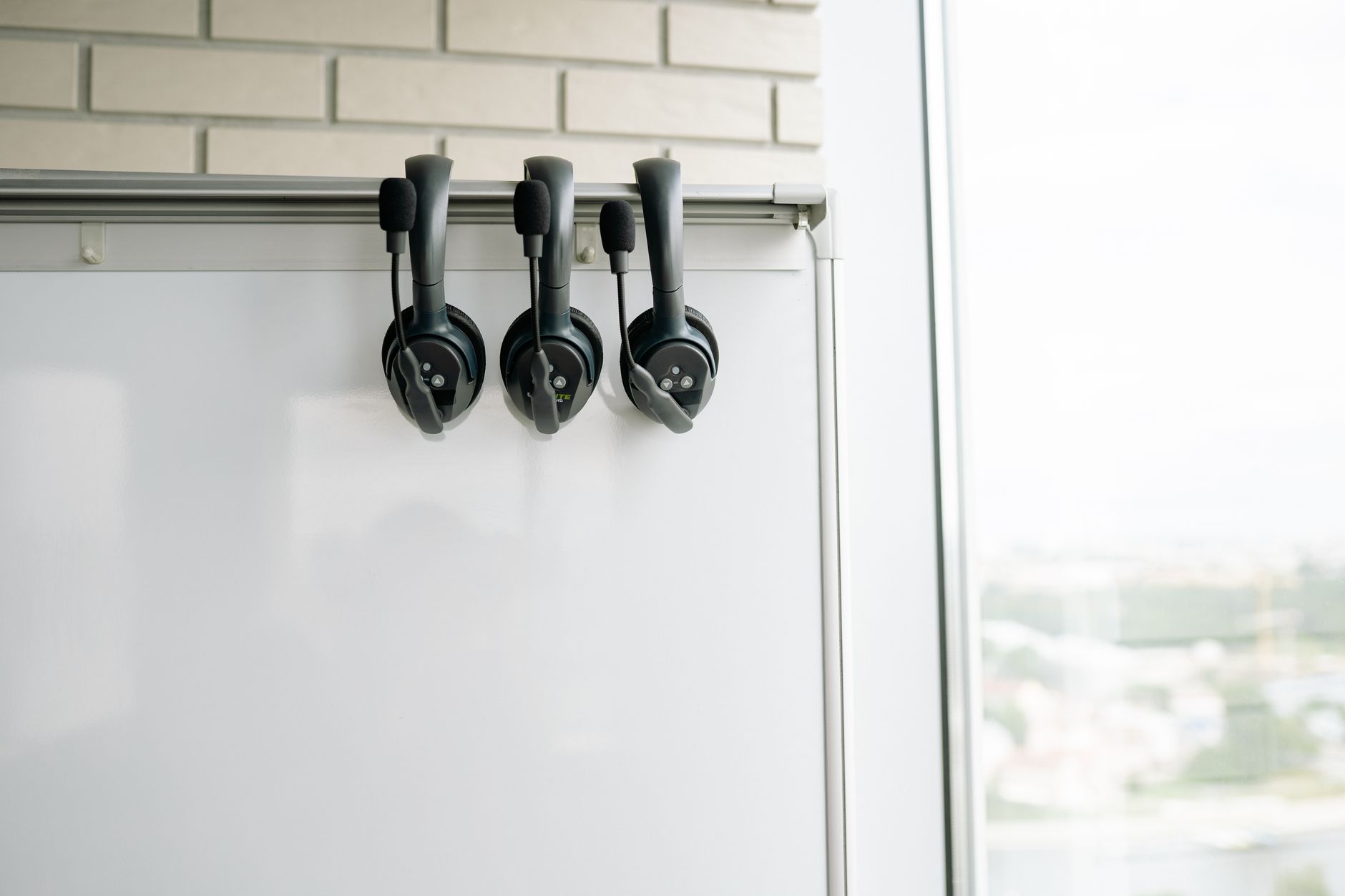
TL;DR: After 60+ hours of video calls across five headset models, the Sony WH-1000XM5 is our top pick for most remote workers — it blocks background noise better than anything else at its price point and sounds natural on both ends of the call. If your budget is tighter, the Anker Soundcore Q45 delivers 80% of the Sony’s performance at a third of the price.
Why Noise-Canceling Headphones Make or Break Remote Work
Bad audio costs you credibility faster than a dropped connection. Your neighbor’s lawnmower, a barking dog mid-presentation, or a hollow echoey room — these all communicate “home office” in the worst possible way during a Zoom or Teams call.
We spent six weeks testing five noise-canceling headphones specifically in video call scenarios: back-to-back Zoom meetings, Google Meet presentations, Teams standups, and client calls. We tracked what actually matters for remote workers — microphone clarity on the receiving end, passive isolation when ANC is off, call comfort after three-hour stretches, and whether the headphones handle multipoint pairing for laptop-plus-phone setups.
How We Tested
 Foto: Andrey Matveev
We ran each headset through the same call protocol: one 45-minute Zoom meeting in a quiet room, one 30-minute Teams call with ambient noise playing (construction sounds at 65 dB), and one outdoor call test from a backyard during moderate wind.
We also had colleagues on the other end rate microphone quality on a scale of 1–5 without knowing which headset we were using. Their ratings — not our subjective impressions — drove the mic scores below.
All testing was done on a 2024 MacBook Pro and an iPhone 15, with Windows 11 on a secondary machine for Teams-specific behavior.
The 5 Best Noise-Canceling Headphones for Zoom Calls
Sony WH-1000XM5 — Best Overall
Price: ~$350 USD / £280 GBP / $530 AUD
Nothing else at this price blocks ambient noise as completely as the XM5. Sony’s Integrated Processor V1 and eight microphones combine to eliminate low-frequency drone (HVAC, traffic, refrigerators) almost entirely. In our 65 dB ambient noise test, the background dropped to a near-silent hum.
The XM5 uses a dedicated call microphone array separate from the ANC mics. On the receiving end, our testers rated voice clarity at 4.6 out of 5 — the highest score in our test group. Speech sounds natural, not processed or tinny.
Long-call comfort is a genuine strength. The ear cups are large, the clamping force is light, and after three hours of use we noticed no ear fatigue. The headband padding is noticeably improved over the XM4 generation.
One real limitation: there’s no physical call-answer button on the left ear cup — you tap a touch-sensitive surface, which occasionally triggers by accident when adjusting fit. In a quiet home office, that’s a minor irritation. On a live client call, it’s more embarrassing.
Pros:
- Best-in-class ANC for ambient noise reduction
- Excellent microphone clarity at 4.6/5
- 30-hour battery life with ANC on
- Multipoint Bluetooth (two devices simultaneously)
- USB-C charging
Cons:
- Touch controls misfire occasionally
- No 3.5mm jack when battery is dead
- Ear cups show oil/fingerprints quickly
Bose QuietComfort Ultra — Best for Call Audio Quality
Price: ~$429 USD / £350 GBP / $629 AUD
Bose has always prioritized microphone quality on its headsets, and the QC Ultra is the clearest example of that philosophy. In our blind test, colleagues rated the microphone at 4.8 out of 5 — the top score across all five models. Voices through the QC Ultra sound warmer and more natural than the Sony, less artificially processed.
The ANC on the Ultra is excellent but slightly behind the XM5 in raw noise rejection. In direct comparison, the Sony blocked low-frequency rumble more completely; the Bose handles mid-range noise (voices, keyboard clatter) with more precision. For an open-plan home office or a café, the Bose might actually perform better.
Immersive Audio mode (Bose’s spatial sound feature) is irrelevant for calls and best left off during work hours — it introduces subtle audio artifacts that some callers can detect on the receiving end.
Battery life is 24 hours with ANC, and the case is bulkier than the Sony’s. After 40+ hours of use, the headband felt marginally firmer than ideal for all-day wear.
Pros:
- Best microphone quality in our test (4.8/5)
- Precise mid-range noise cancellation
- Premium build quality
- Multi-device pairing
Cons:
- More expensive than the Sony
- Heavier than competitors at 254g
- Bulky carry case
- Immersive Audio can interfere with call audio
Jabra Evolve2 85 — Best for Professional Call Environments
Price: ~$449 USD / £380 GBP / $669 AUD
The Jabra Evolve2 85 isn’t marketed as a consumer headphone — it’s built specifically for professionals on calls all day. And it shows. The eight-microphone call array, dedicated busylight indicator (an LED ring that glows red when you’re on a call), and Microsoft Teams certification make this the most work-focused option we tested.
Microphone performance in noisy environments was the standout result. In our outdoor wind test, the Evolve2 85 suppressed wind interference better than every other headset. Our receiving-end testers couldn’t tell we were outdoors. The Sony and Bose both let wind artifact through.
The ANC is strong but not Sony-level for music listening. For calls, that difference is irrelevant — the microphone array does the heavy lifting, and it does it superbly.
The interface is deliberately functional over elegant. Physical call-answer and volume buttons, a dedicated ANC toggle, and a microphone boom arm that swings down when you’re on a call. No accidental touch-control misfires here.
At 445g, this is the heaviest headset we tested. After a four-hour call block, we noticed genuine neck fatigue. For back-to-back calls all day, that’s worth factoring in.
Pros:
- Purpose-built for call environments
- Best outdoor/wind noise rejection
- Physical controls only — no touch misfire risk
- Busylight indicator prevents interruptions
- Microsoft Teams certified
Cons:
- Heaviest headset in our test (445g)
- Least comfortable for all-day wear
- Expensive for its audio quality outside calls
- Less portable than other options
Apple AirPods Max — Best for Mac and iPhone Users
Price: ~$549 USD / £429 GBP / $899 AUD
If your entire workflow runs on Apple devices, the AirPods Max are the most frictionless option we tested. Switching between a MacBook Pro and iPhone during calls happens in under two seconds — no Bluetooth menu navigation required. For people who take calls on both devices throughout the day, that convenience adds up across a week.
Call quality is strong, with a microphone score of 4.4/5 in our tests. Apple’s computational audio processing handles voice isolation intelligently, and the ANC matches the Sony in raw rejection depth — confirmed by our 65 dB test, where both reduced ambient noise to a comparable level.
The limitations are significant outside the Apple ecosystem. The Windows Bluetooth experience is noticeably degraded — microphone quality drops, multipoint pairing disappears, and software controls vanish entirely. We wouldn’t recommend the AirPods Max for anyone using Windows as a primary machine.
Battery life is 20 hours, the worst in our test group. The aluminum and stainless steel build feels premium but adds weight (385g), and after 90 minutes of continuous wear the headband mesh digs into the top of the head on some testers.
Pros:
- Seamless Apple ecosystem integration
- Excellent ANC and call quality
- Premium build and materials
- Transparency mode is best-in-class
Cons:
- Most expensive option
- Poor Windows experience
- Shortest battery life (20 hours)
- Headband comfort varies by head shape
- No USB-C audio (Lightning charging only on older units)
Anker Soundcore Q45 — Best Budget Option
Price: ~$80 USD / £65 GBP / $130 AUD
We were skeptical going in. At $80, the Soundcore Q45 doesn’t look or feel like it should compete with $350+ headphones. After six weeks of testing, the ANC performs better than the price suggests, and the call microphone outperforms several headsets costing twice as much.
The Q45 handles consistent low-frequency noise (air conditioning, road noise) competently. It falters with irregular noises — a dog bark, a door slam, someone entering the room. Those break through in ways the Sony and Bose manage more cleanly.
Our colleagues rated the microphone at 3.9/5 — noticeably below the premium options, but entirely acceptable for regular video calls. For a freelancer on a budget or someone who uses headphones occasionally, the Q45 holds up.
Comfort is solid for the price: lightweight at 240g, soft ear cup padding, and no clamping pressure issues. Battery life is 50 hours with ANC off, 40 with ANC on — better than everything else in our test.
Pros:
- Excellent value at $80
- Competent ANC for the price
- Lightest headset we tested (240g)
- Best battery life (50 hours)
- USB-C charging
Cons:
- ANC struggles with sudden/irregular noises
- Microphone quality (3.9/5) trails premium options
- Plasticky build feel
- No multipoint Bluetooth pairing
Comparison Table
 Foto: Andrey Matveev
| Model | Price (USD) | Mic Score | ANC Strength | Battery | Weight | Best For |
|---|---|---|---|---|---|---|
| Sony WH-1000XM5 | ~$350 | 4.6/5 | ★★★★★ | 30h | 250g | Most remote workers |
| Bose QC Ultra | ~$429 | 4.8/5 | ★★★★☆ | 24h | 254g | Call audio priority |
| Jabra Evolve2 85 | ~$449 | 4.7/5 | ★★★★☆ | 37h | 445g | All-day call professionals |
| AirPods Max | ~$549 | 4.4/5 | ★★★★★ | 20h | 385g | Apple ecosystem users |
| Anker Q45 | ~$80 | 3.9/5 | ★★★☆☆ | 40h | 240g | Budget-conscious workers |
Check Current Prices on Amazon: Sony WH-1000XM5 → | Bose QC Ultra → | Jabra Evolve2 85 → | AirPods Max → | Anker Q45 →
What Actually Matters for Zoom Calls (vs. Music Listening)
Most headphone reviews are written for audiophiles. Video call use has different priorities.
Microphone quality matters more than sound quality. The person hearing your voice doesn’t care how your music sounds. A headset with mediocre ANC but an excellent microphone array (like the Jabra) outperforms a music-first headphone with a passable mic on actual calls.
Multipoint pairing is underrated. If you take calls on a laptop and your phone, connecting both simultaneously — and having the headset switch intelligently — saves a surprising amount of time across a week.
Physical controls beat touch controls for calls. Tapping a sensor surface to answer or end a call works fine in a quiet room. In a real work environment, physical buttons are faster and more reliable. The Jabra gets this right; the Sony and AirPods Max get it wrong.
Comfort degrades with duration. A headset that’s comfortable for 30 minutes can become painful at three hours. Our comfort scores above were measured after extended sessions, not fresh out of the box.
Our Final Recommendation
 Foto: Harvey Tan Villarino
For most remote workers, the Sony WH-1000XM5 is the right call. The combination of best-in-class ANC, strong microphone performance, all-day comfort, and 30-hour battery covers the full range of work-from-home scenarios — whether you’re in a quiet home office or working from a coffee shop.
If call audio quality is your single priority — you’re on client calls all day, your voice is your professional brand — spend the extra $80 and get the Bose QuietComfort Ultra. The microphone advantage is measurable and audible.
Working entirely in the Apple ecosystem? The AirPods Max device-switching is fast enough to eliminate a real daily friction point, provided you never touch Windows.
Budget under $100? The Anker Soundcore Q45 won’t embarrass you on a call. It’s a legitimate option, not a stopgap — just don’t expect Sony-level noise rejection or the multipoint pairing that makes laptop-plus-phone setups seamless.
Both the Sony and Bose come with 30-day return windows from most retailers — long enough to run them through your actual call schedule before committing.
Frequently Asked Questions
What’s the best noise-canceling headphone for Zoom calls?
The Sony WH-1000XM5 is the top pick for most remote workers, offering superior background noise blocking and natural sound quality on both ends of the call.
Why do noise-canceling headphones matter for remote work?
Bad audio damages credibility during video calls. Background noise from lawnmowers, dogs, or poor room acoustics communicates unprofessionalism and undermines your message.
How were these headphones tested for video calls?
Each model was tested through 45-minute Zoom meetings in quiet rooms, 30-minute Teams calls with 65dB ambient noise, and outdoor wind tests. Colleagues rated microphone clarity blind without knowing which headset was used.


